By the time November rolls around, classrooms start to feel a little different.
Students are excited about Thanksgiving, holiday conversations seem to pop up every five minutes, and keeping everyone’s attention can become a little more challenging than it was in September. At the same time, we still have important learning to do.
That’s why I always look for activities that feel fun to students but still have a strong academic purpose. One of my favorite ways to do that is with pattern blocks.
At first glance, students think they’re simply building a turkey. What they don’t realize is they’re also practicing geometry, strengthening fine motor skills, solving problems, and developing perseverance. It’s one of those rare classroom activities that’s engaging for students and easy for teachers.
Here are five reasons I think pattern block activities deserve a spot in every November math lesson plan!
Pattern Blocks Make Geometry Come Alive
Geometry can be difficult for young learners when it’s only taught on paper.
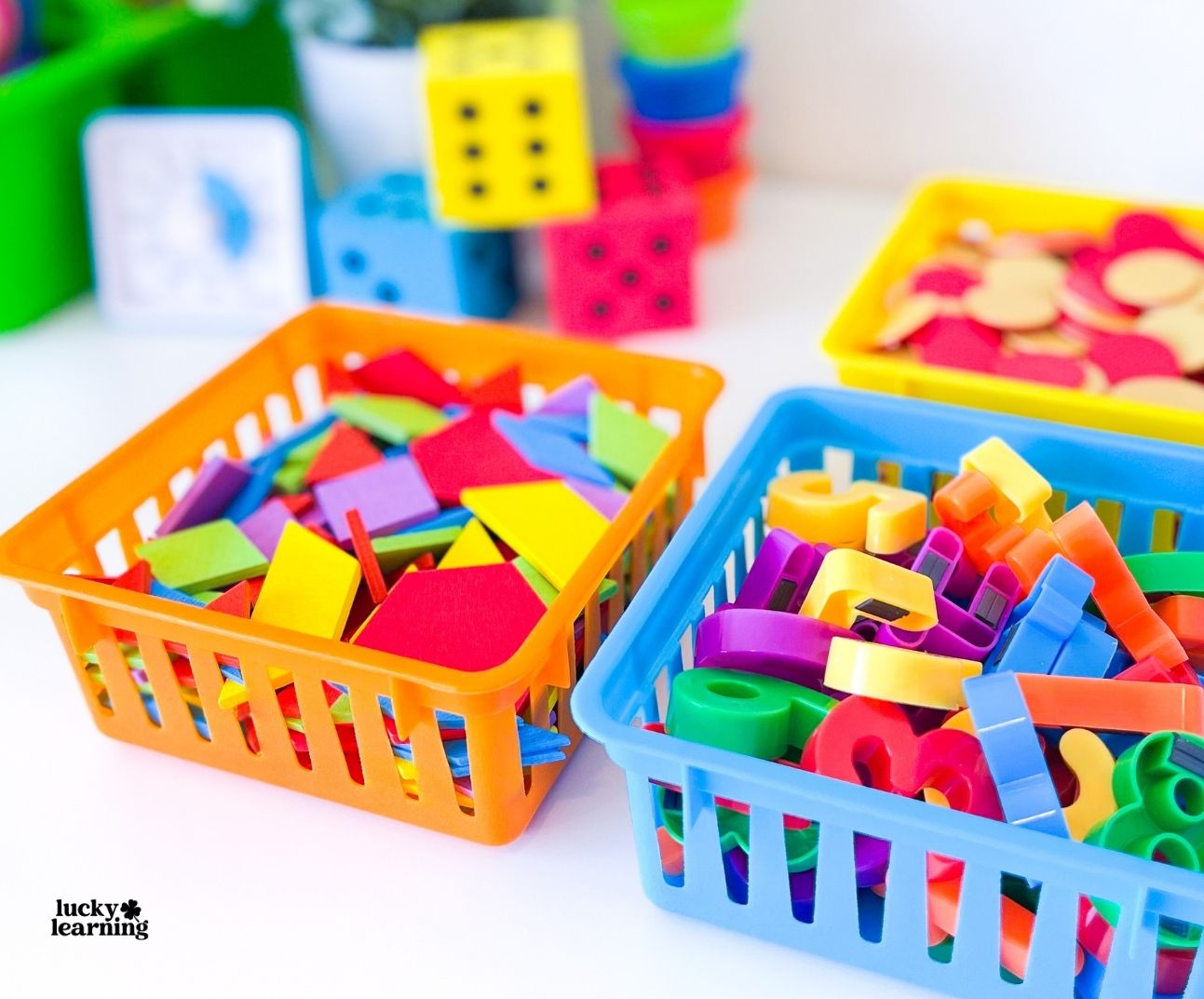
Students need opportunities to touch, move, rotate, and experiment with shapes before they truly understand how they work together. Pattern blocks give them exactly that opportunity!
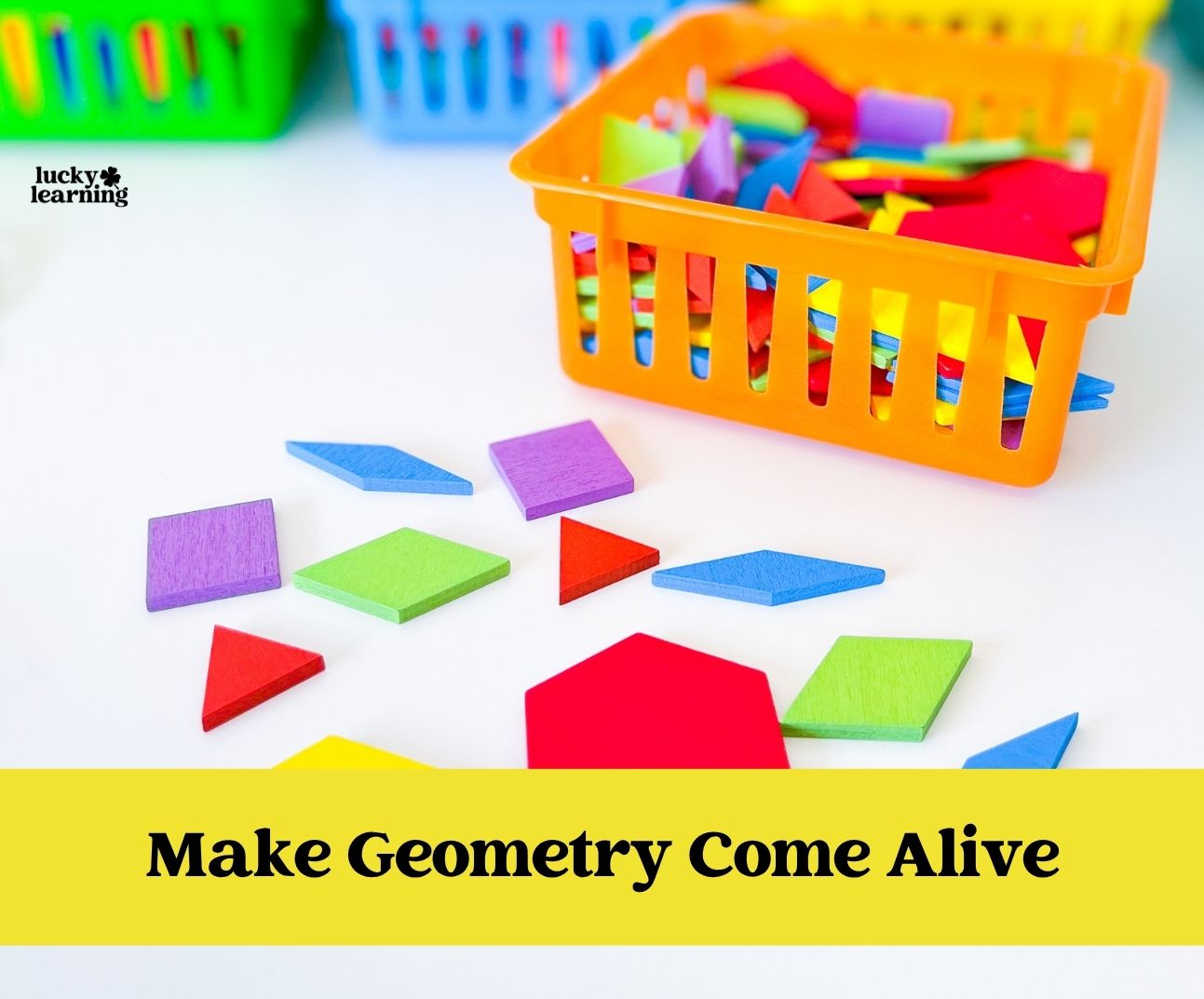
As students build pictures using triangles, hexagons, rhombuses, trapezoids, and other familiar shapes, they’re developing a much deeper understanding than they would by simply identifying shapes on a worksheet.
Without even realizing it, they’re learning how smaller shapes combine to create larger ones, comparing attributes, and strengthening spatial reasoning skills.
It’s meaningful math that happens through play {and you know how passionate I am about math play!}
Every Pattern Block Picture Becomes a Problem-Solving Challenge
One thing I love about pattern blocks is that every design is really a puzzle.
Students don’t always know exactly which piece belongs next. They have to stop, think, test different options, and sometimes try again when something doesn’t fit.
Those moments of productive struggle are where so much learning happens.
They’re developing flexible thinking, learning to persevere, and discovering that mistakes are simply part of solving a problem.
Those are skills that reach far beyond math.
They’re Secretly Building Fine Motor Skills
As primary teachers, we know that many of our students still need plenty of opportunities to strengthen the muscles in their hands.
Pattern blocks naturally provide that practice.
Picking up each piece, rotating it, lining up edges, and carefully placing it into position all require precision and control. Students are strengthening the same muscles they’ll use for handwriting, cutting, and other classroom tasks.
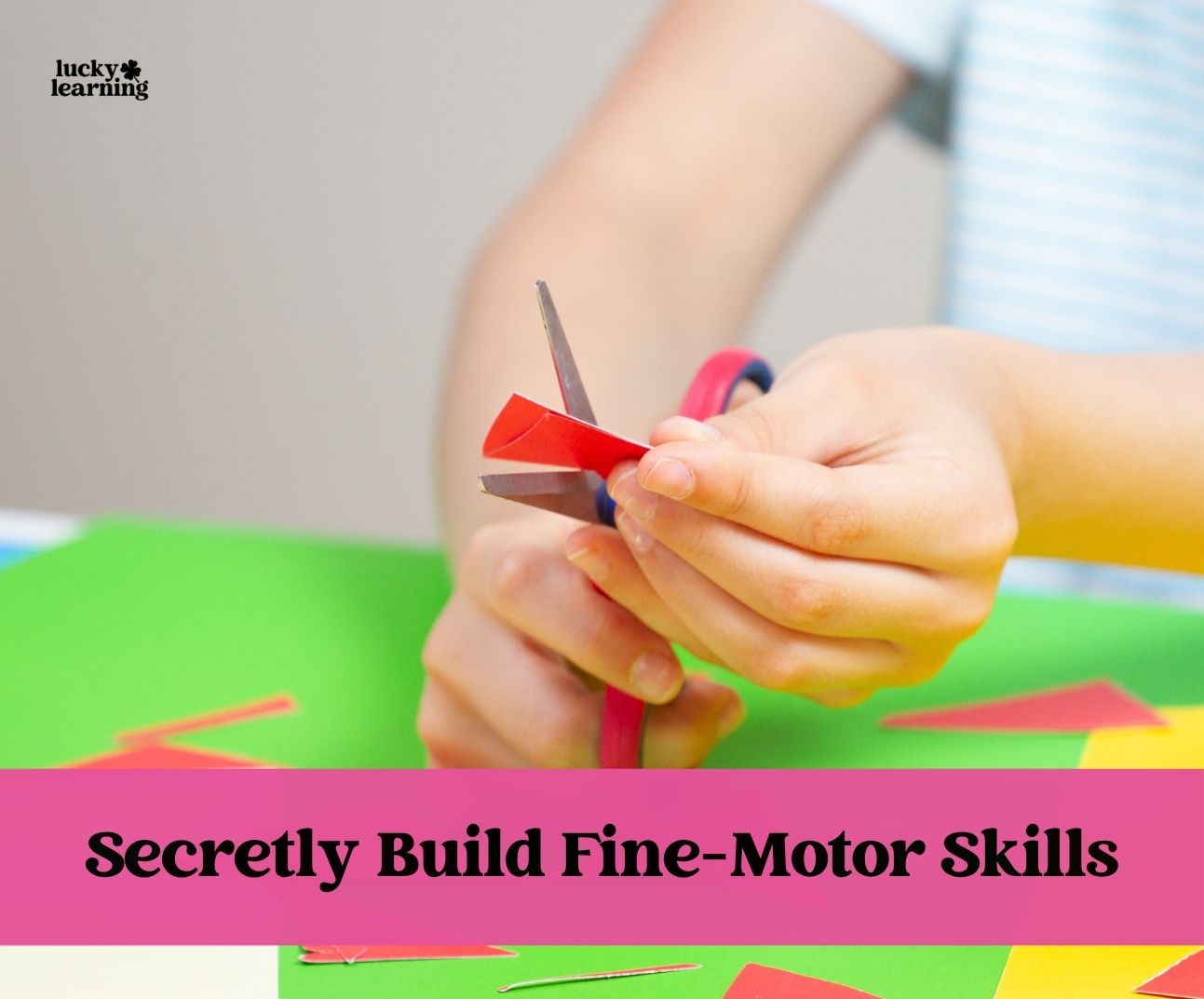
The best part is they don’t see it as work.
They’re completely focused on finishing their turkey.
They’re One of the Easiest November Math Activities You’ll Set Up
November always seems to fly by.
Want me to send you this post?
Between conferences, classroom celebrations, assemblies, and preparing for Thanksgiving break, there’s rarely extra time to prep complicated activities.
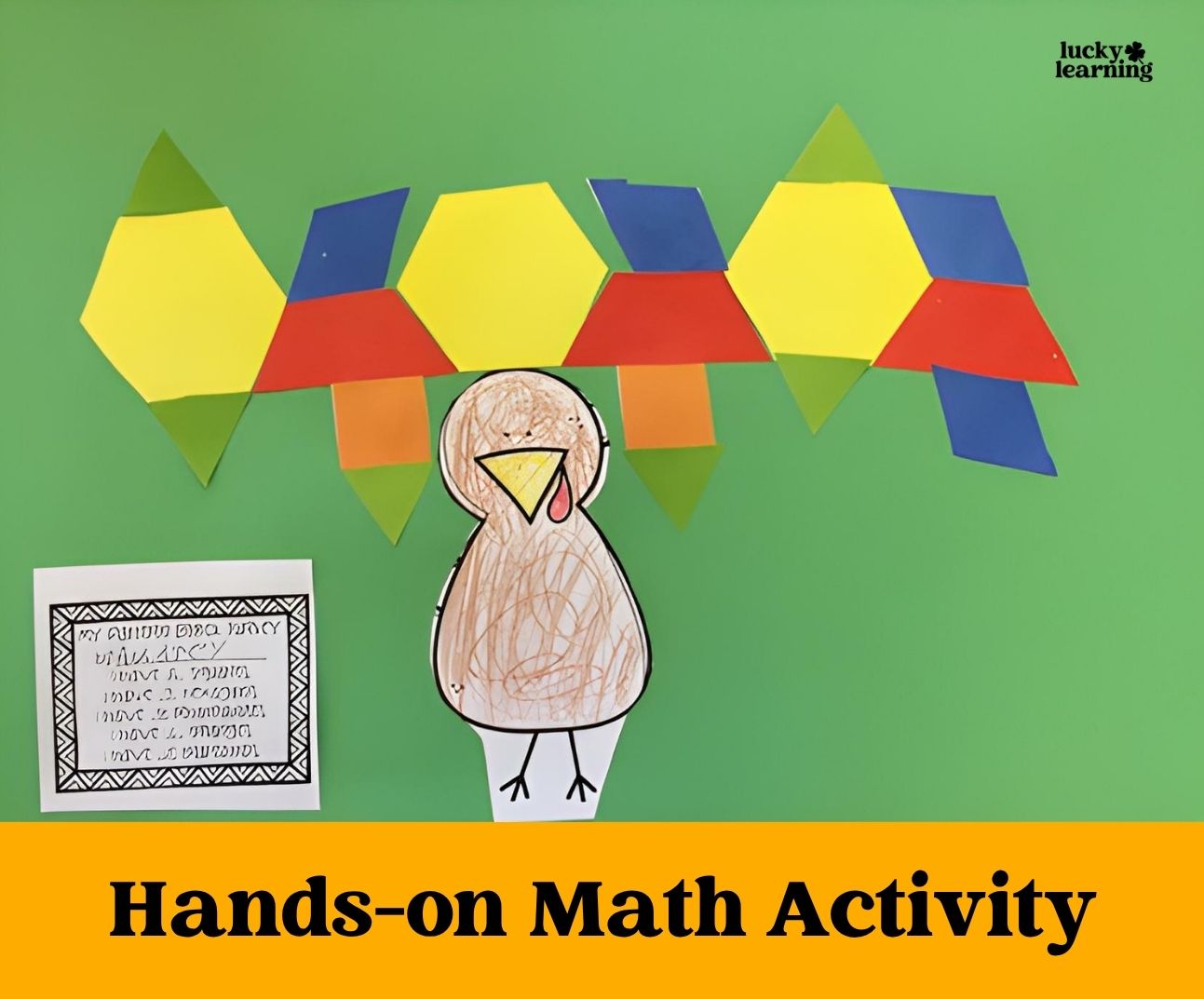
That’s another reason I reach for pattern block activities.
Simply print the pages, place a tub of pattern blocks at the table, and your center is ready to go.
Students can work independently, with a partner, during morning tubs, or as an early finisher activity. They also make a great option for indoor recess or those afternoons when everyone could use a quieter, hands-on activity.
As teachers, we all appreciate resources that work in multiple ways.
Seasonal Learning Keeps Students Excited
There’s something magical about changing the theme without changing the learning.
The math skills stay the same, but suddenly students are much more excited because they’re creating a turkey instead of another everyday picture.
That little bit of novelty goes a long way. And look how darling this bulletin board will be hanging in your classroom!
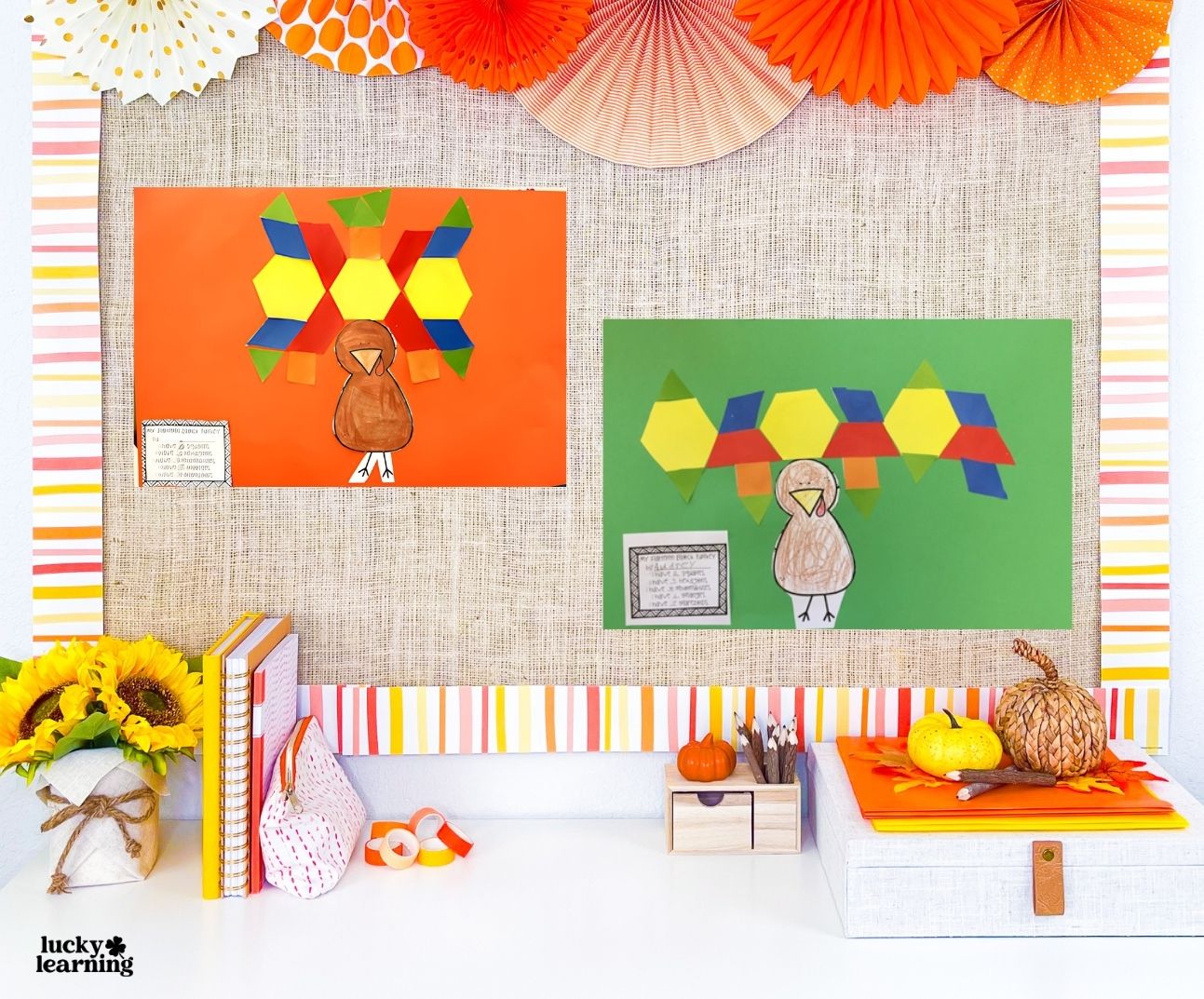
Seasonal activities help keep classroom routines feeling fresh while giving students another opportunity to practice important concepts. Instead of counting down the days until Thanksgiving break, they’re eagerly asking if it’s time for math centers.
That’s a win in my book.
One of My Favorite November Math Activities
Every year, one of my students’ favorite November activities is building Pattern Block Turkeys.
I love watching students carefully choose each shape, celebrate when they figure out a tricky section, and proudly show off their finished creations. While they’re having fun, they’re also practicing geometry, spatial reasoning, fine motor skills, and problem solving.
Even better, the activity is easy to fit into almost any part of the school day.
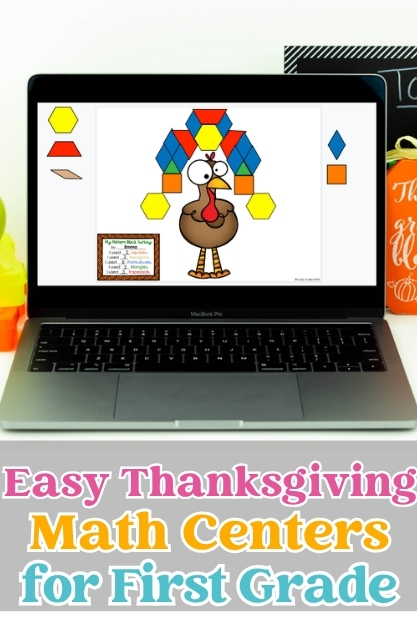
Whether you’re using math centers, morning tubs, independent work time, or an early finisher station, it comes together in just a few minutes. If your classroom uses technology centers, there’s also a digital version, giving you even more flexibility.
It’s one of those activities that students ask to do again, and those are always my favorite resources to keep in the classroom.
Small Activities Can Lead to Big Learning
Sometimes the simplest classroom materials end up creating the richest learning experiences.
Pattern blocks may look like colorful manipulatives, but they’re helping students build mathematical thinking, strengthen fine motor skills, practice perseverance, and develop confidence every time they pick up a shape.
And during a busy month like November, it’s nice to have activities that keep students engaged while continuing meaningful learning.
If you’re looking for an easy-to-prep Thanksgiving math center your students will genuinely enjoy, my Pattern Block Turkey activity is ready to print or assign digitally. It’s a simple way to add hands-on geometry practice to your November plans while bringing a little extra excitement to your classroom.
What about your class? Do your students love pattern blocks as much as mine do? I’d love to hear how you use them during November in the comments below!
Don’t forget to pin this post for later!