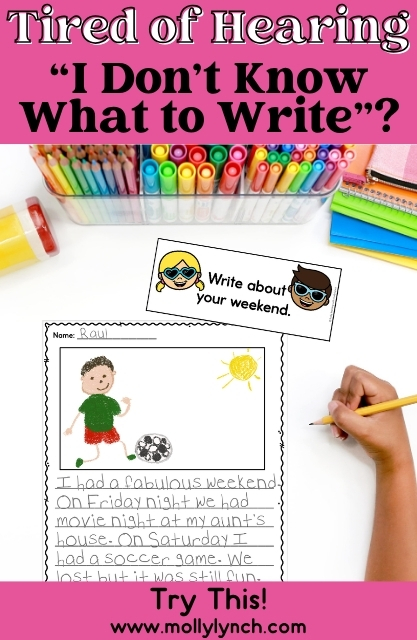
If you’ve ever asked a class of first graders to write about anything they want, you probably know what happens next.
A few kids immediately start writing. One child has somehow filled half a page before you’ve even finished giving directions.
And then there are the other students.
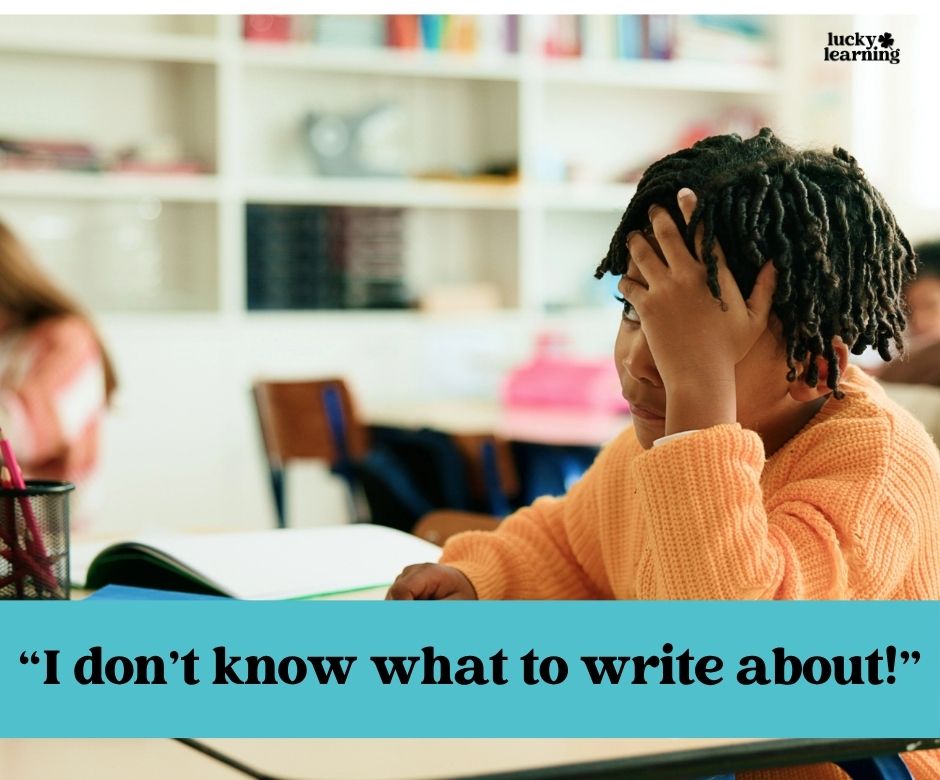
“I don’t know what to write.”
“I don’t have any ideas.”
“What should I write about?”
For young writers, sometimes the hardest part of writing isn’t actually writing. It’s figuring out what to write about in the first place.
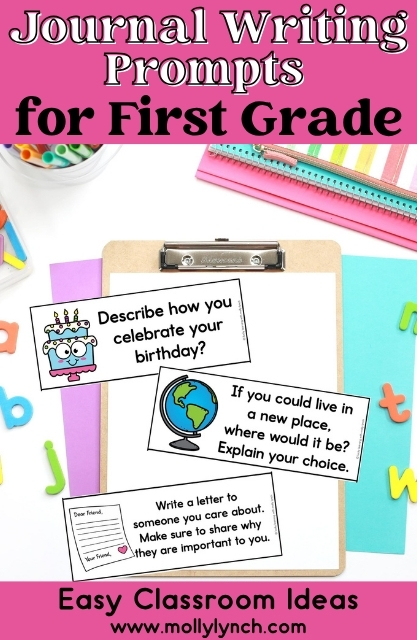
That’s one of the reasons I love using journal writing prompts. A simple prompt gives kids a starting point. Instead of staring at a blank page, they already have an idea they can think about, talk about, draw, and eventually turn into writing.
Journal writing doesn’t need to be complicated, either. In fact, I’ve found that keeping it simple and consistent is often what helps young writers grow the most!
Keep Journal Writing Short and Consistent
When we’re trying to help kids become stronger writers, it can be tempting to think they need long stretches of writing time.
They really don’t!
Especially in kindergarten, first grade, and second grade, a short amount of consistent writing practice can be incredibly valuable.

You might spend just 5 or 10 minutes on journal writing each day. Students know the routine; they know where to find their materials, and they can get started without needing a lengthy lesson every time. {Don’t get me wrong, there is definitely a time & place for a lesson, but it doesn’t need to be every single day!}
Journal writing can fit into so many parts of the school day. It can be morning work, a writing warm-up, part of your literacy centers, an early finisher activity, or even something students work on while you meet with a small group.
The important part is the consistency!
When students write regularly, the whole process starts to feel less intimidating. They spend less time worrying about what they’re supposed to do and more time actually putting their ideas onto paper.
Give Students a Starting Point
The words “write about anything you want” sound wonderfully open-ended to an adult.
To a six-year-old, they can feel overwhelming.
There are just too many possibilities.
A writing prompt narrows those possibilities and gives students somewhere to begin.

Something as simple as “What would you do if you found a giant box on the playground?” immediately gives students something to picture.
Now they have an idea.
They might draw the giant box. They might imagine what’s inside. They might tell the child sitting next to them an elaborate story about how a puppy, a robot, and 400 pieces of candy are somehow all inside that box.
And suddenly, they have plenty to write about.
That’s why I like using prompts that are fun, relatable, and interesting to kids. The goal isn’t to make the prompt complicated. The goal is to get their ideas flowing.
Sometimes a silly question does more for a reluctant writer than any writing lesson ever could.
Let Kids Draw Before They Write
One of the easiest ways to help a child who says, “I don’t know what to write,” is to tell them to start with the picture.
Drawing is an important part of the writing process for young children.
When students draw, they’re actually developing their story or idea. They’re thinking about characters, details, setting, events, and vocabulary before they ever pick up their pencil to write a sentence.
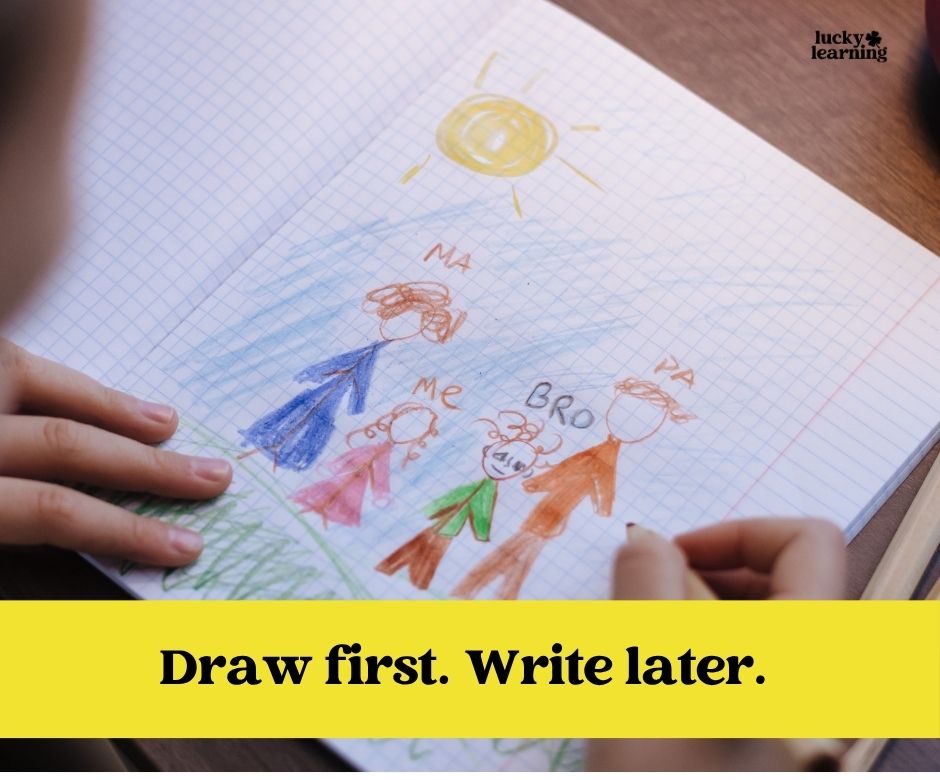
After a student has spent a few minutes drawing a picture, you can ask questions like, “Tell me what’s happening here,” or “What should I know about your picture?”
Often, the words they say out loud are exactly what they can write.
For a beginning writer, that might mean labeling the picture or writing one sentence. For another student, that same picture might lead to four or five sentences.
Both students are practicing the important skill of turning an idea into written language.
Adjust the Expectations Without Changing the Prompt
One of my favorite things about journal writing is how easy it is to differentiate.
Everyone can respond to the same prompt, but the finished writing doesn’t need to look the same.
A kindergarten student might draw a detailed picture, add labels, and write a simple sentence.
A first grader might write two or three sentences in the beginning of the year.
A second grader might be ready to add more details, explain their thinking, or turn the same idea into an entire story.
You don’t necessarily need three different writing activities for three different groups of students.
You can simply adjust your expectations.
This is especially helpful in primary classrooms because the range of writing ability can be enormous. You may have one student who’s still working on stretching out words while another student is asking how to spell “extraordinary.”
A good journal prompt can work for both of them!
Don’t Correct Everything
This one can be hard for teachers.
We see the missing capital letter, the backwards letter, the invented spelling of “because”, and maybe the sentence that desperately needs punctuation!
And yes, conventions matter.
Want me to send you this post?
But journal writing doesn’t have to become a correction exercise every single day.
If students believe everything they write is going to come back covered in corrections, they may become much more hesitant about taking risks.
There’s a time for editing, revising, spelling instruction, grammar, and handwriting practice. There’s also a time for simply getting ideas onto paper.
Journal writing can be that place.
Sometimes I’m looking at a journal entry because I want to know what the student has to say, not because I’m checking every capital letter and period.
You can always choose one skill to focus on. Maybe you’re reminding the class to begin sentences with capital letters this week. Next week, you might focus on ending punctuation.
Students can work on conventions without feeling like every journal page needs to become a perfectly polished piece of writing.
Use Fun Prompts to Reach Reluctant Writers
If you have students who groan every time you announce writing, start with topics they actually want to talk about.
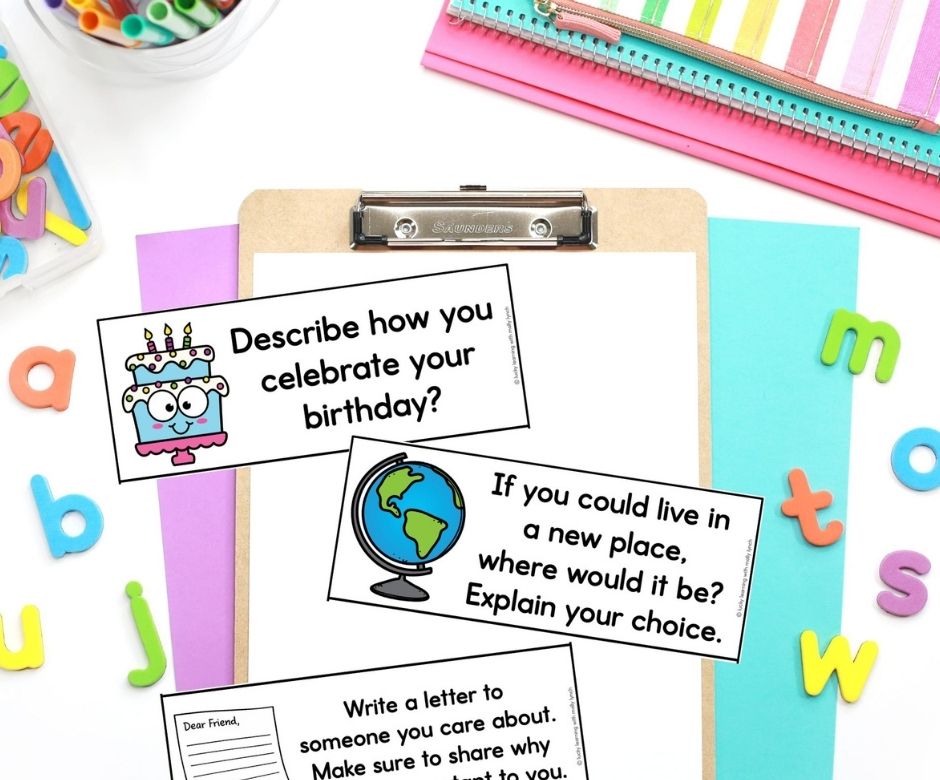
Would you rather have a pet dinosaur or a pet dragon?
What would happen if your teacher turned into a cat?
If you could invent a new ice cream flavor, what would it be?
What’s the best thing to do on a rainy day?
These aren’t complicated writing assignments.
That’s exactly the point.
Kids already have opinions about these things.
And when students have something to say, writing becomes much easier.
I especially love prompts that lead to conversations because students can talk through their ideas before writing. Turn-and-talks work beautifully before journal time.
Give students the prompt, let them think for a moment, and then have them tell a partner their answer.
By the time they open their journals, they’ve already rehearsed what they want to say.
That little bit of oral language practice can make a huge difference for beginning writers.
Make Sharing Part of the Routine
Writing feels more meaningful when someone else gets to hear it.
You don’t need every student to share every day. That could turn a 10-minute writing activity into an hour-long event!
Instead, invite two or three students to share their journal entries at the end of writing time. You can also have students share with a partner.

This is especially fun when the prompt is something silly or imaginative. Kids love hearing how their classmates answered the same question.
Sharing also quietly teaches students that there isn’t one “right” answer to a writing prompt.
Twenty students can respond to the exact same topic and come up with twenty completely different ideas! That’s a pretty powerful lesson for young writers.
Make Journal Writing Easy on Yourself, Too
Writing practice is valuable for kids, but it needs to be manageable for teachers.
I’m always looking for routines that students can eventually complete independently. The less time I have to spend explaining materials and directions, the more time I can spend actually helping students.
That’s exactly why I created my Writing Ideas for Journals resource.
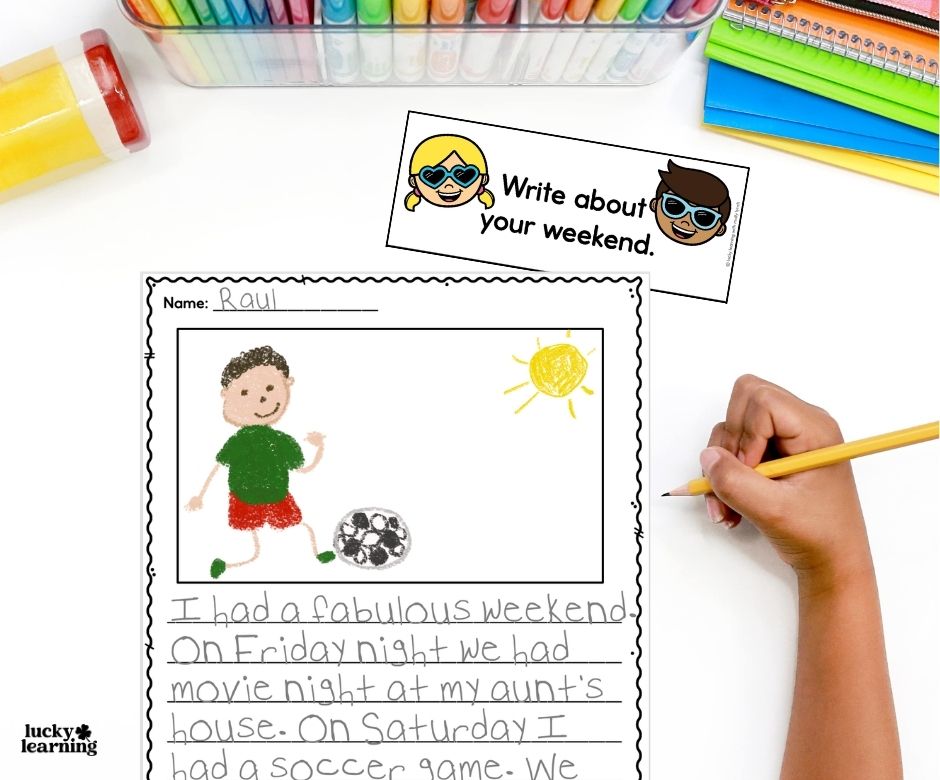
It gives young writers a variety of topics they can use when they need a little inspiration. Instead of coming up with a new writing idea every morning or hearing “What should I write about?” over and over, students have ideas ready to go.
You can use the prompts for whole-class journal writing, writing centers, early finishers, morning work, or simply as an idea bank for students who get stuck.
And because the prompts are flexible, you can use them with students at very different writing levels.
Some students may draw and write one sentence. Others may turn the same idea into an entire page.
The goal isn’t for every journal entry to look the same. The goal is to get kids writing.
Give Young Writers Time to Grow
Writing is one of those skills where growth can feel slow when you’re watching it happen day by day.
Then you look back at a student’s writing from September and compare it to what they’re doing in January.
Suddenly, the growth is impossible to miss.
The child who once wrote one sentence is filling half a page.
The student who constantly said, “I don’t know what to write,” now opens their journal and gets started.
The student who was afraid to spell anything incorrectly is finally stretching out unfamiliar words and taking a chance.

That’s why I love keeping journals throughout the year. They don’t just give students writing practice. They create a little record of their growth.
And sometimes the best thing we can do for young writers is simply give them interesting ideas, a little time, and lots of opportunities to practice.
If you’d like to make journal writing easier to implement in your classroom, you can grab my Writing Ideas for Journals: Writing Topics for Primary Writers. It’s filled with ready-to-use ideas that help take away the “I don’t know what to write!” problem and get kids focused on sharing their ideas.
Try adding just 5–10 minutes of journal writing to your routine this week and see what happens.
And I’d love to know: What’s the biggest challenge your students have during writing time? Is it coming up with an idea, getting started, writing enough, or something else?