There’s almost always one moment during writing time that every primary teacher recognizes immediately.
One student is staring at a blank page. Another suddenly needs to sharpen their pencil for the third time. Someone quietly whispers, “I don’t know what to write.”
Meanwhile, you’re trying to help students brainstorm ideas while also conferencing with writers, answering questions, and keeping the rest of the class focused.
Writing time can feel overwhelming for young learners. Honestly, it can feel overwhelming for teachers, too!!
The good news is that reluctant writers usually don’t dislike writing as much as they dislike not knowing how to start. Once students have support, structure, and engaging ideas, writing becomes much less intimidating.
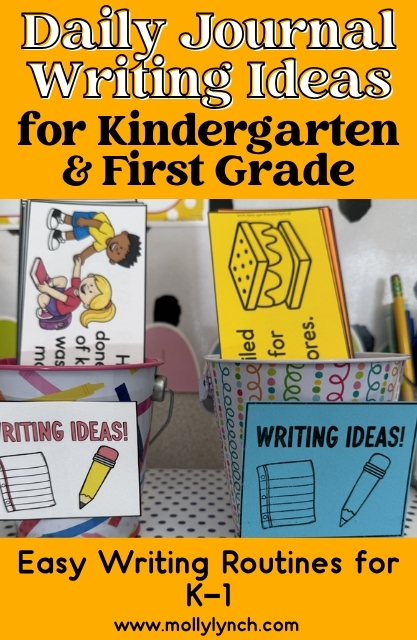
One of the easiest ways I’ve found to help young writers build confidence early in the year is through simple journal writing prompts.
Why Young Writers Often Struggle With Writing
For many Kindergarten, first grade, and second grade students, writing feels like a huge task!
Before they even begin writing, they’re already trying to think about spelling, punctuation, handwriting, spacing, and what they want to say. That’s a lot for little learners to juggle all at once!

Some students have wonderful ideas in their heads, but don’t know how to organize them on paper. Others get overwhelmed by the blank page sitting in front of them. And some students are so worried about making mistakes that they’d rather avoid writing completely. Any of that sound familiar?
I’ve noticed that many reluctant writers aren’t actually reluctant thinkers. They usually have stories, opinions, and ideas ready to share once they feel comfortable enough to begin.
That’s where writing prompts can completely change the atmosphere in the classroom.
Writing Prompts Give Students a Starting Point
Sometimes the hardest part of writing is simply getting started.
When students are given a fun or engaging prompt, they no longer have to come up with an idea completely on their own. Instead of worrying about what to write, they can focus on expressing their thoughts.
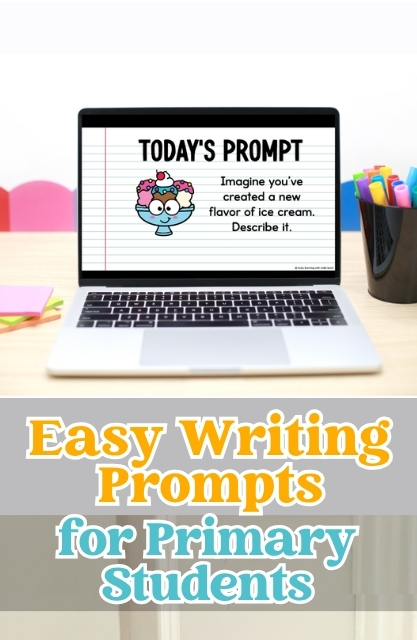
Simple prompts like “If I could invent a new ice cream flavor…” or “Would you rather live in a treehouse or a castle?” immediately spark conversation and creativity.

Even students who usually hesitate during writing time often become excited when the topic feels fun, silly, or connected to their lives.
I’ve found that predictable journal writing routines also help students feel more confident. When children know they’ll have a short writing opportunity each day, they stop seeing writing as a stressful event and begin viewing it as a normal part of the classroom routine.
Over time, those small writing moments really add up.
Keep Writing Time Short and Positive
One mistake we sometimes make is expecting reluctant writers to immediately write long responses.
Young students build writing stamina slowwwwwwly.
When I’m working with hesitant writers, I like to keep journal writing sessions short and manageable at first. Even five to ten focused minutes can make a big difference.

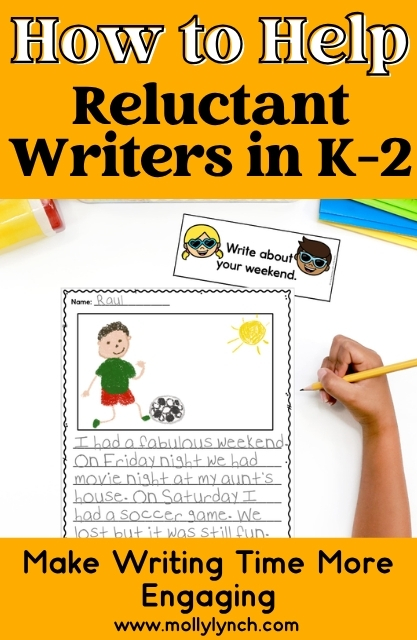
At the beginning of the school year, I encourage students to draw pictures before writing. Drawing helps children organize their thoughts and gives them confidence before putting words on paper. As the year progresses, we switch to writing first and then drawing!
Another helpful strategy is celebrating effort instead of perfection.
Want me to send you this post?
Sometimes, a student who only writes one complete sentence has actually made huge progress. When students feel successful, they’re much more willing to try again the next day.
The goal isn’t perfect writing every single time. The goal is to help students see themselves as writers!
Make Writing Feel Fun Instead of Stressful
Young children naturally love storytelling, imagination, and sharing ideas. Writing becomes much more engaging when it feels creative and low-pressure.
In my classroom, students always responded well to prompts that made them laugh or imagine something unusual {such as these Silly Story Prompts}

Questions like “What would happen if it rained candy?” or “What animal would make the best teacher?” instantly created excitement.
Adding seasonal prompts throughout the year can also keep writing fresh and engaging. Students love writing about snow days, summer adventures, favorite holidays, classroom celebrations, and silly seasonal scenarios.
I’ve also found that sharing time makes a huge difference. Even reluctant writers often become excited when they know they’ll have a chance to read their response to a partner or the class.
Creating a supportive classroom environment where students feel safe taking risks helps writing confidence grow naturally.
Consistency Builds Confident Writers
One thing I’ve learned over the years is that writing growth doesn’t happen overnight.
Some students start the year barely writing a sentence. Then slowly, through consistent practice and encouragement, they begin filling entire pages.
That growth is incredible to watch!

Daily journal writing gives students regular opportunities to practice expressing their thoughts without the pressure of formal writing assignments every single time.
And honestly, having ready-to-go writing ideas makes life easier for teachers, too.
One thing that completely changed writing time in my classroom was having a collection of simple writing prompts prepared ahead of time. Instead of scrambling to come up with daily topics or hearing “I don’t know what to write,” students could jump right into thinking and creating.
Having engaging prompts ready to go helped writing time feel smoother, calmer, and much more productive.
Helping Students Build a Love of Writing
Writing confidence grows through practice, encouragement, and positive experiences.
When students are given supportive tools and engaging topics, they begin realizing they actually do have ideas worth sharing.
And once students feel successful as writers, everything changes.
If you’re looking for an easy way to support reluctant writers in your classroom, simple journal prompts can make a huge difference. They help students get started, encourage creativity, and build writing stamina in a low-pressure way that feels manageable for young learners.

If you’d like ready-to-use writing topics for your classroom, you can check out my Writing Ideas for Journals resource designed specifically for Kindergarten, first grade, and second grade students.
It’s filled with printable prompts {in both color and black & white} plus a digital version so you can easily project to the classroom! Oh, and I’ve included writing paper, too!

I’d also love to hear from you. What’s the biggest challenge your students face during writing time?